
When to Clear During AED Use
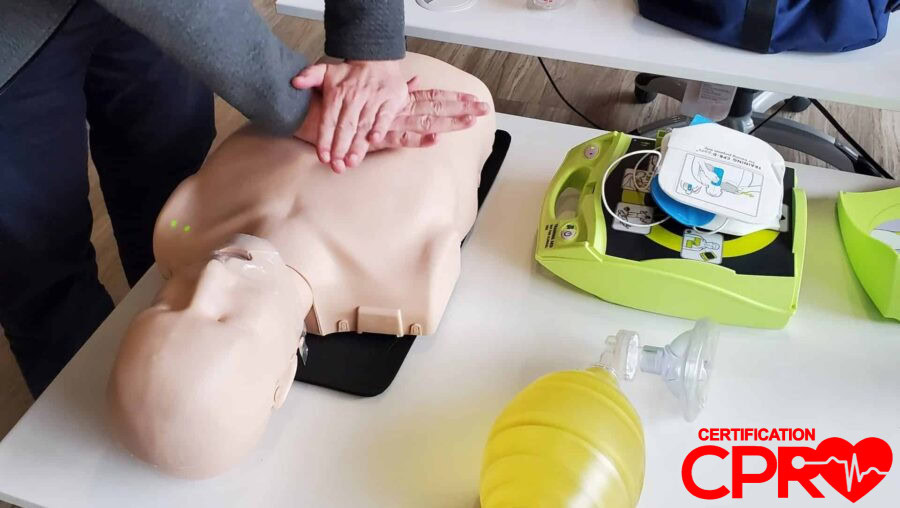
The AED sequence has two moments where everyone in the room has to stop touching the patient. Both happen fast, both matter, and both get missed more often than they should. If you understand exactly when and why clearing happens, the whole CPR-and-AED response starts to feel less fragmented and more like one connected set of actions.
In Fort Worth, AED use has to work in practical places: Texas Health Harris Methodist Hospital Fort Worth, Cook Children’s Medical Center, JPS Health Network, and Baylor Scott & White All Saints Medical Center, school buildings, airport areas, offices, and major venues such as the Fort Worth Stockyards, Dickies Arena, Will Rogers Memorial Center, Sundance Square, and TCU venues. For when to clear during aed use, the local pressure is the same: the device can only help after someone brings it over, exposes the chest, places the pads, clears the area, and follows the prompts.
Television makes “stand clear” sound dramatic. In an emergency, it is a short, specific instruction with a direct safety purpose. Clearing protects the people nearby and gives the AED the still body it needs for accurate rhythm analysis.
The two clearing moments are before rhythm analysis and before shock delivery. They are brief, but getting them wrong affects both safety and the quality of the device’s assessment. Every AED user should practice them before an emergency, not hear them as a last-minute reminder.
Upcoming CPR Class Dates and Times
What “Stand Clear” Actually Means
When the AED says “stand clear” or “do not touch the patient,” it means nobody in the room should be making physical contact with the person. That includes hands on the chest, a hand on the shoulder, a knee pressed against the body, or leaning in close enough to be touching. Contact through clothing counts too.
The reason has two parts. First, anyone touching the patient during a shock can feel that current. The energy is low enough that it will not seriously injure a healthy adult, but it is strong enough to be felt, and it can cause someone to react in a way that disrupts the scene. Second, contact during rhythm analysis can interfere with the electrical reading the AED is trying to take. The device is looking at a very specific signal. Noise from outside contact makes that harder.
The rescuer running the AED is responsible for making this happen. The verbal command matters because people nearby may not be watching the device display. A clear, loud “everyone clear” gives anyone still touching the patient a reason to step back before the device proceeds.
When to Clear During Rhythm Analysis
After the pads are placed on the bare chest, the AED will tell you it is analyzing the heart rhythm. This is the first clearing moment. Chest compressions have to stop. Everyone has to step back from the patient. The person doing compressions should lift their hands and move back. Anyone kneeling beside the patient should shift away from contact.
The analysis takes a few seconds. During that window, the AED is reading the electrical activity of the heart to determine whether the rhythm is one that may respond to defibrillation. The two rhythms an AED is designed to detect and advise shocking are ventricular fibrillation and pulseless ventricular tachycardia. If neither is present, the device will say no shock is advised and direct the response back to CPR.
The temptation to keep doing compressions during this moment is understandable. It feels wrong to stop. But the pause is necessary because the AED cannot take a reliable reading during compressions. The rescuer should say “clear” out loud, visually check that no one is touching the patient, and let the device complete its assessment without delay.
When to Clear Before Shock Delivery
If the AED identifies a shockable rhythm, it will charge and then either deliver the shock automatically or prompt the rescuer to press the shock button. A second clearing moment happens here. This is the familiar “stand clear” moment: say the command, check the scene visually, make sure no one is in contact, and then deliver the shock.
The visual check is not optional. In a crowded room, someone may be kneeling next to the patient without realizing they are still close enough to be in contact. A family member may be holding the person’s hand. Someone nearby may have leaned in to see what is happening. The rescuer has to look around, not just say the words and immediately press the button.
This moment also has a time component. The shock should be delivered promptly once the scene is clear. Every second of delay is a second of unnecessary pause in the response. The goal is a fast, clean visual check followed by immediate delivery, not a prolonged inspection that stretches the pause beyond what is needed.
Getting Back to CPR Immediately After
Once the shock is delivered, or once the AED says no shock is advised, the next step is usually to resume CPR. The AED will tell you when to start. That prompt matters because many rescuers hesitate after the shock, waiting to see whether the person responds. That hesitation costs time.
The device will continue analyzing after each CPR cycle and will advise additional shocks if the rhythm remains shockable. The pattern repeats: CPR, analyze, clear, shock if advised, back to CPR. The clearing moments are brief pauses in a continuous response, not endpoints. After each one, the rescuer needs to get back to compressions quickly.
Hands-on training matters because the pause-and-resume rhythm takes practice. Someone who has only read about it may hesitate longer than someone who has drilled it. The AHA BLS class gives rescuers that repetition in a supervised setting before they need it during an emergency.
Common Clearing Mistakes and How to Avoid Them
The most common mistake is continuing compressions while the AED is analyzing. The rescuer gets into a rhythm and does not want to stop. But compressions during analysis mean the device cannot take a clean reading, which can delay the process or produce an inaccurate assessment.
The second common mistake is saying “clear” without checking whether everyone has stepped back. The word is not enough on its own. A bystander who is not watching the rescuer may still be touching the patient when the shock is delivered. The rescuer has to look, confirm, and then act.
The third mistake is pausing too long after the shock. The clearing moment ends when the shock is delivered or when the device says no shock is advised. CPR should restart immediately. Waiting to see whether the person’s eyes open, or standing still while processing what just happened, extends the gap in circulation unnecessarily.
For workplaces and teams who want their staff to respond well under pressure, onsite CPR training builds exactly this kind of situational comfort. Practicing the sequence in a familiar environment helps people respond faster when it matters.
What to Say and How to Say It
The verbal command does not need to be elaborate. “Clear,” “everyone clear,” or “stand clear” said loudly is enough. The goal is to give everyone in the area a direct instruction they can respond to without confusion. A flat, quiet announcement that people at the edges of the room cannot hear is not useful.
After the command, the rescuer should pause for a moment, scan the scene, and confirm nobody is in contact before letting the AED proceed. In a loud environment like a gym or a crowded venue, that scan matters even more. Someone near the edges of the group may not have heard the command at all.
If someone does not respond, the rescuer should address them directly rather than hoping they step back on their own. “Step back, please” directed at a specific person is faster and clearer than repeating the general command and hoping the result changes.
FAQ
Upcoming CPR Class Dates and Times
Book Your CPR Class
Choose a class date and reserve your seat in our hands-on AHA BLS CPR class.